The Organ at Dutilh
By: Rob Lynch, Director of Traditional Music
Earlier this month, we finally had the opportunity to properly introduce and dedicate our new organ. On the evening of January 4th, I presented an organ recital and demonstration to show off all of the amazing things our new instrument can do. In this week’s blog, I’d like to talk about the organ and touch on some of its many features.
The first half of the program visited three of the four most common sources of organ literature: England, Germany, and France. We talked a lot about the time and place in which these pieces were written. Across all genres, music is a reflection of its society, and organ music is no different. In England, the organ has long accompanied both worship and royal ceremonies, giving us a vast repertoire of processions and fanfares.
The pipe organs of the time had the most impact on organ compositions, both by their limitations but also by the unique colors they offered these brilliant composers. In North Germany in the late 1600s, Dieterich Buxtehude composed dazzling Praeludium and Fugues with bright, sparkling sounds of the Baroque period. Years later in France, organ builders set their sights on mimicking the orchestra, leading to large symphonic organ works by organists like Louis Vierne.
During the Dedication Service, we read Psalm 150 where the psalmist compels everyone and everything that has breath praise the Lord. The organ is so well suited for this task, loudly praising the Lord with a variety of instruments. We concluded the service with the incredible hymn, Praise to the Lord, the Almighty.
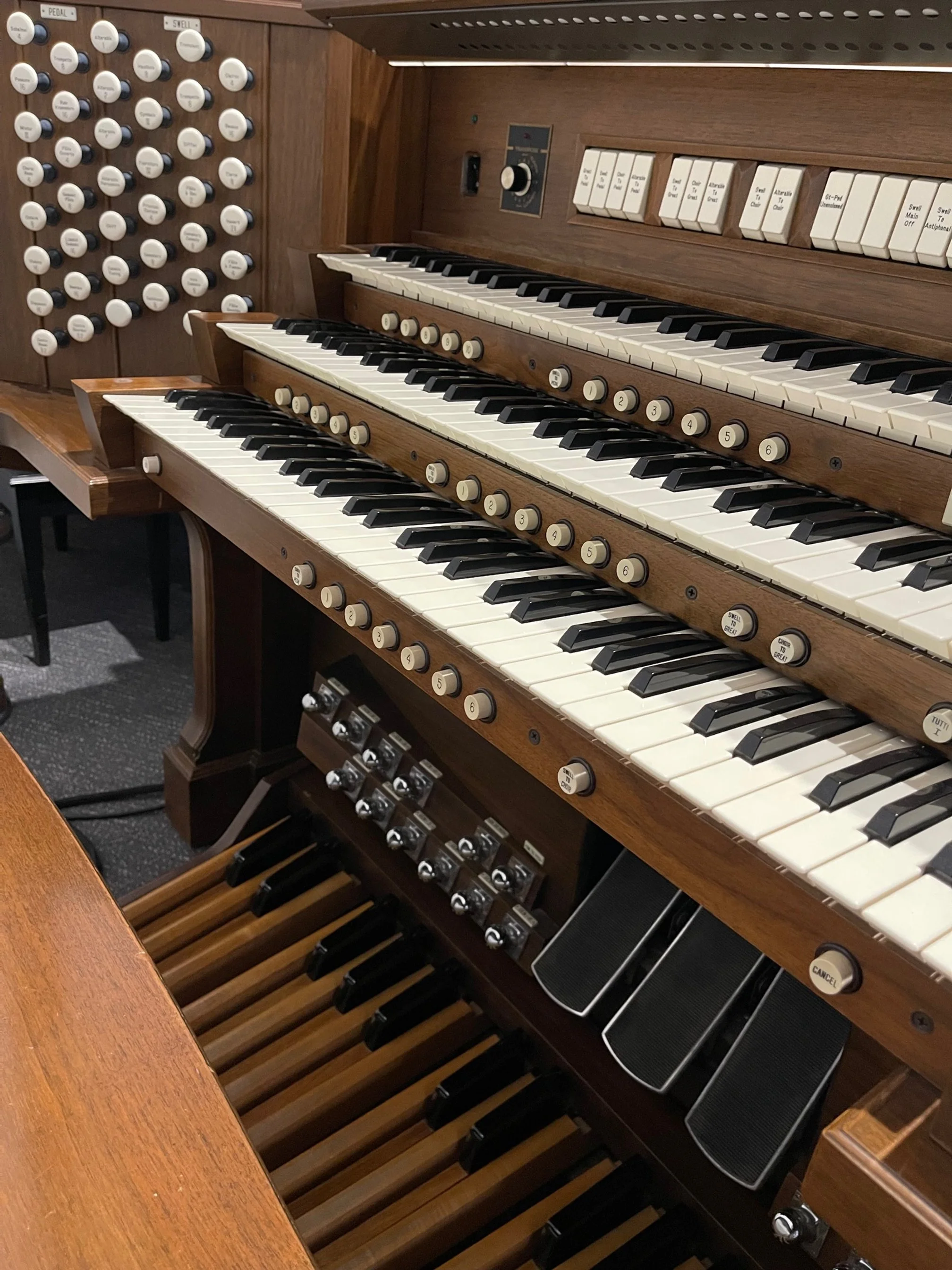
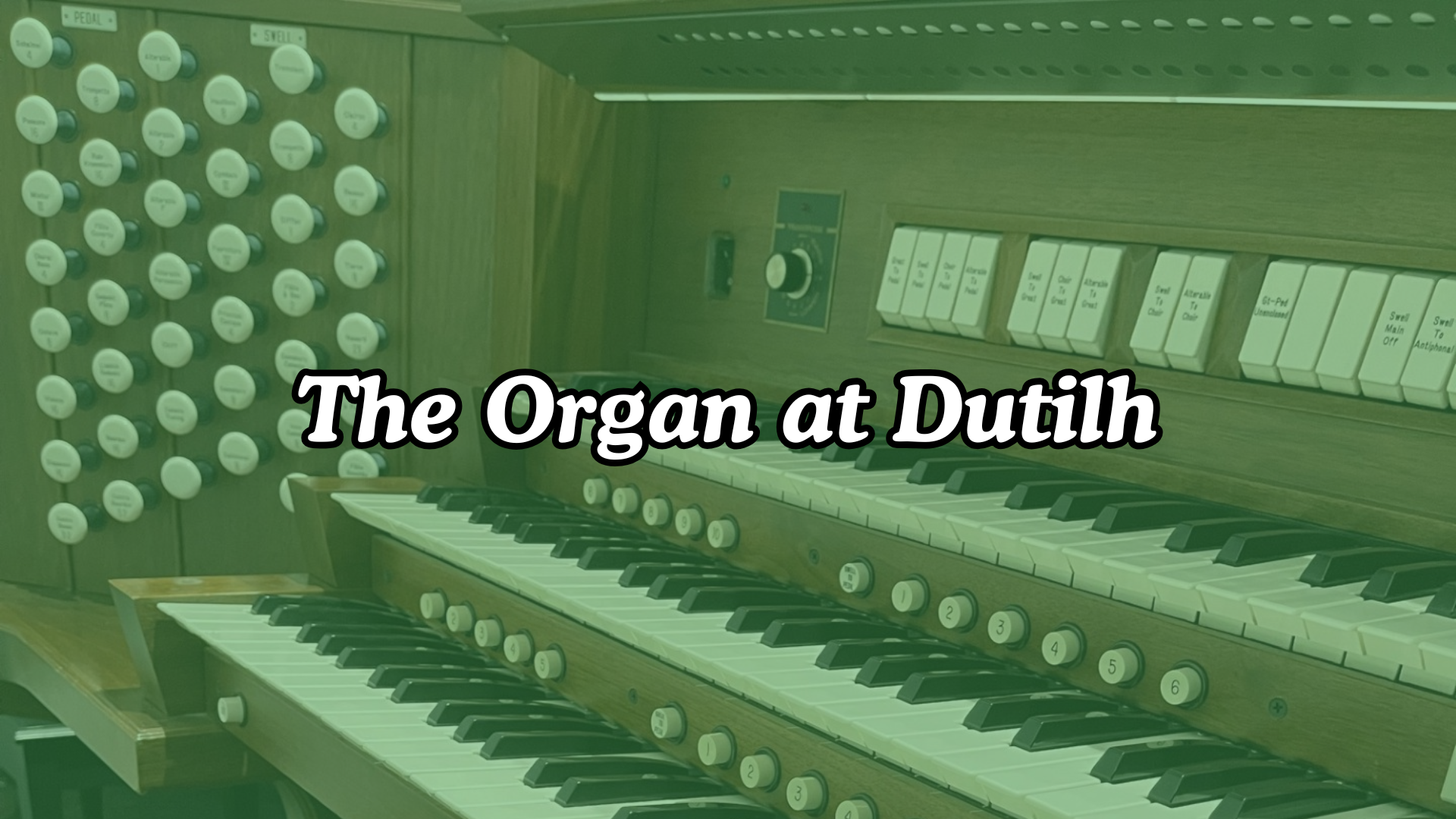
In the second half of the recital, we dove into the anatomy of the instrument and what differentiates it from a piano or keyboard. The organ console is comprised of manuals, pedals, and drawknobs. This instrument has three manuals (rows of keys) each with 61 notes. They are the Swell (top manual), Great (middle), & Choir (bottom). Each division has its own stops as well as their own speakers. These speakers are positioned in two ‘chambers’. This organ has seven speakers that are arranged to the left and right of the chancel to emulate the way a pipe organ would be laid out, creating ‘surround sound’.
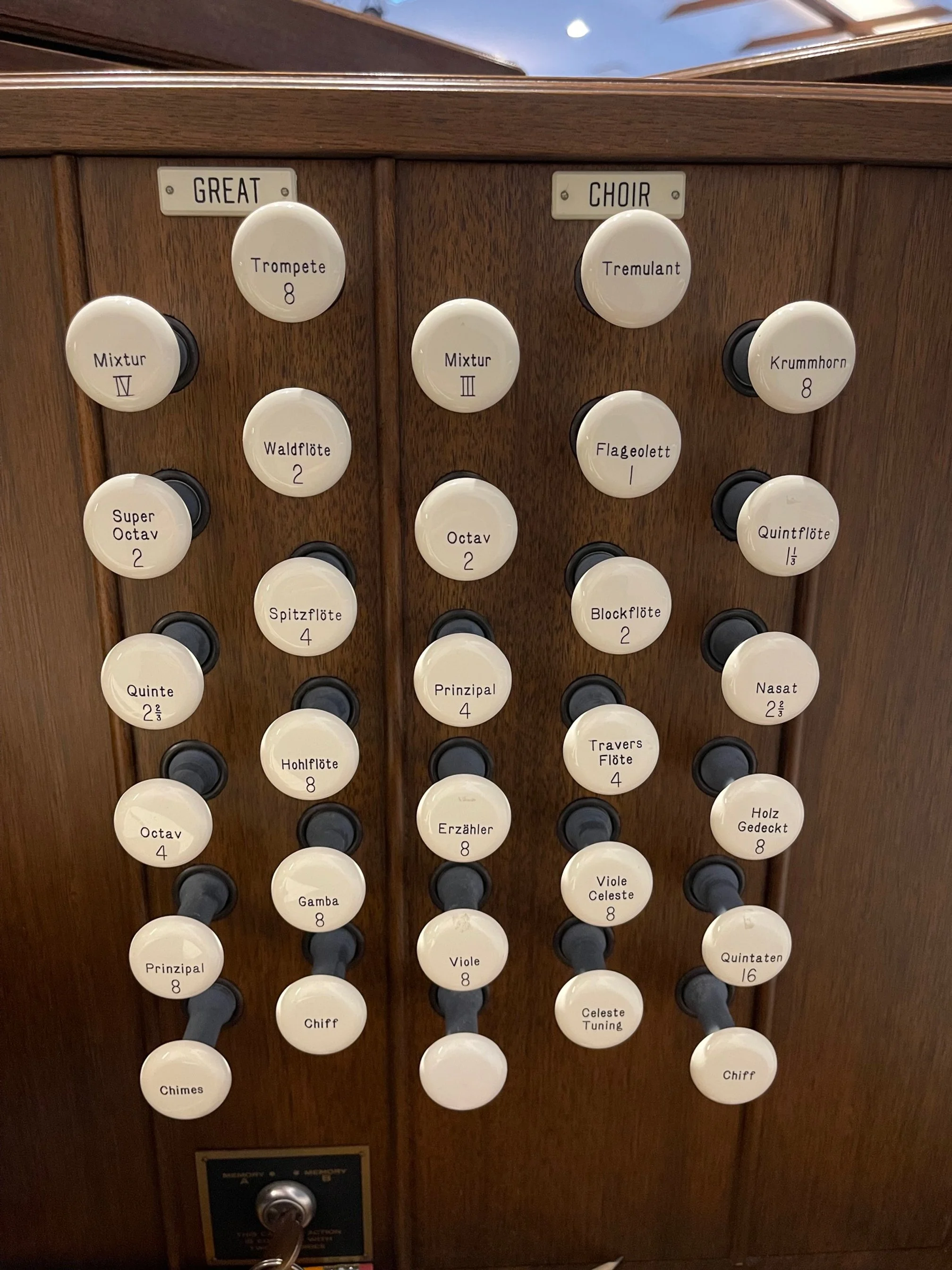
Each stop (or drawknob) has a name (written in English, German, or French) and a number. The name tells us what kind of pipe that given stop is emulating and the number indicates at what pitch the note sounds. If you’ve ever heard the phrase “pulling out all the stops”, this is where it comes from. The many families of pipes and the significance of the numbers on the drawknobs are a blog post for another day!
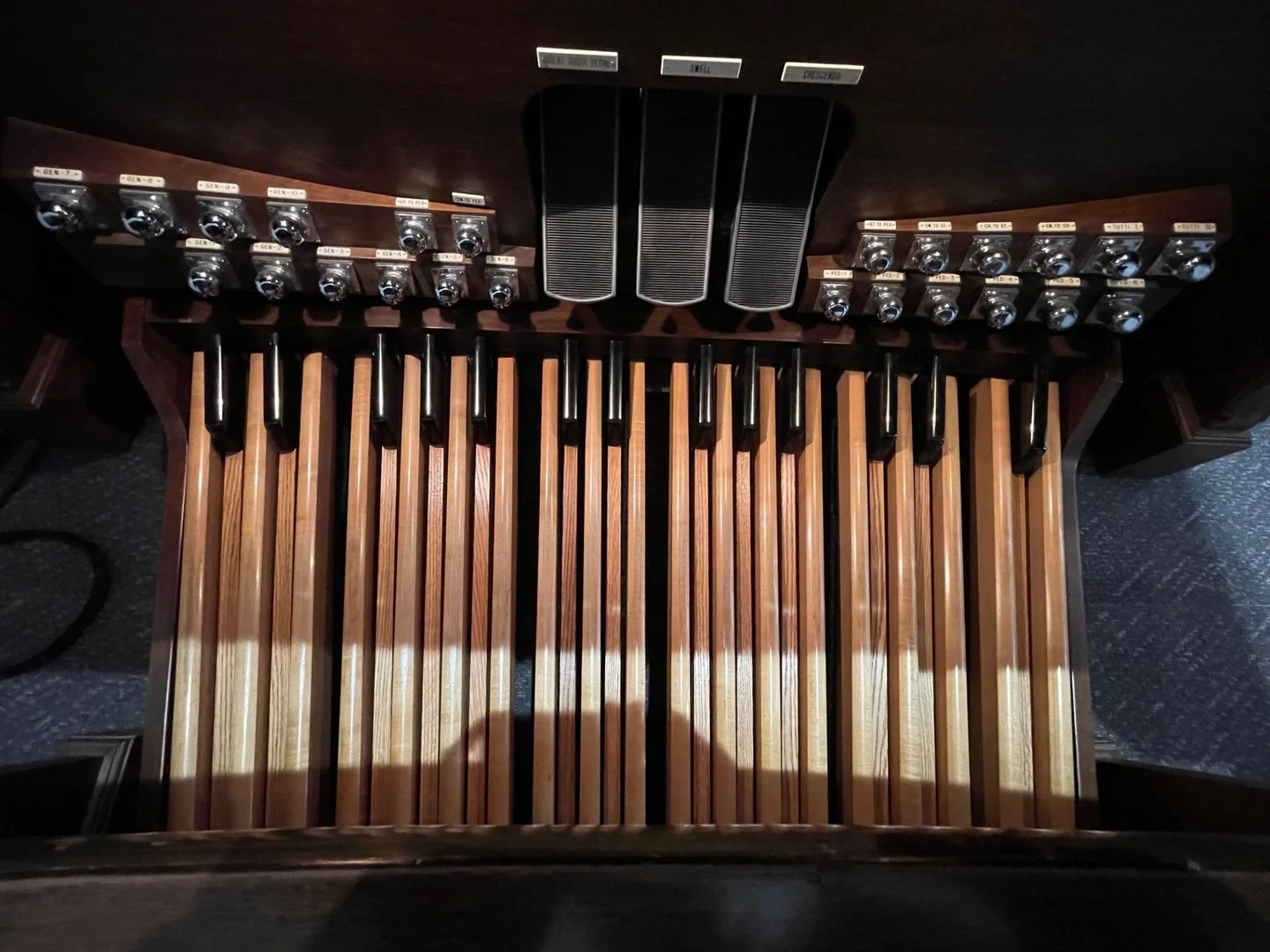
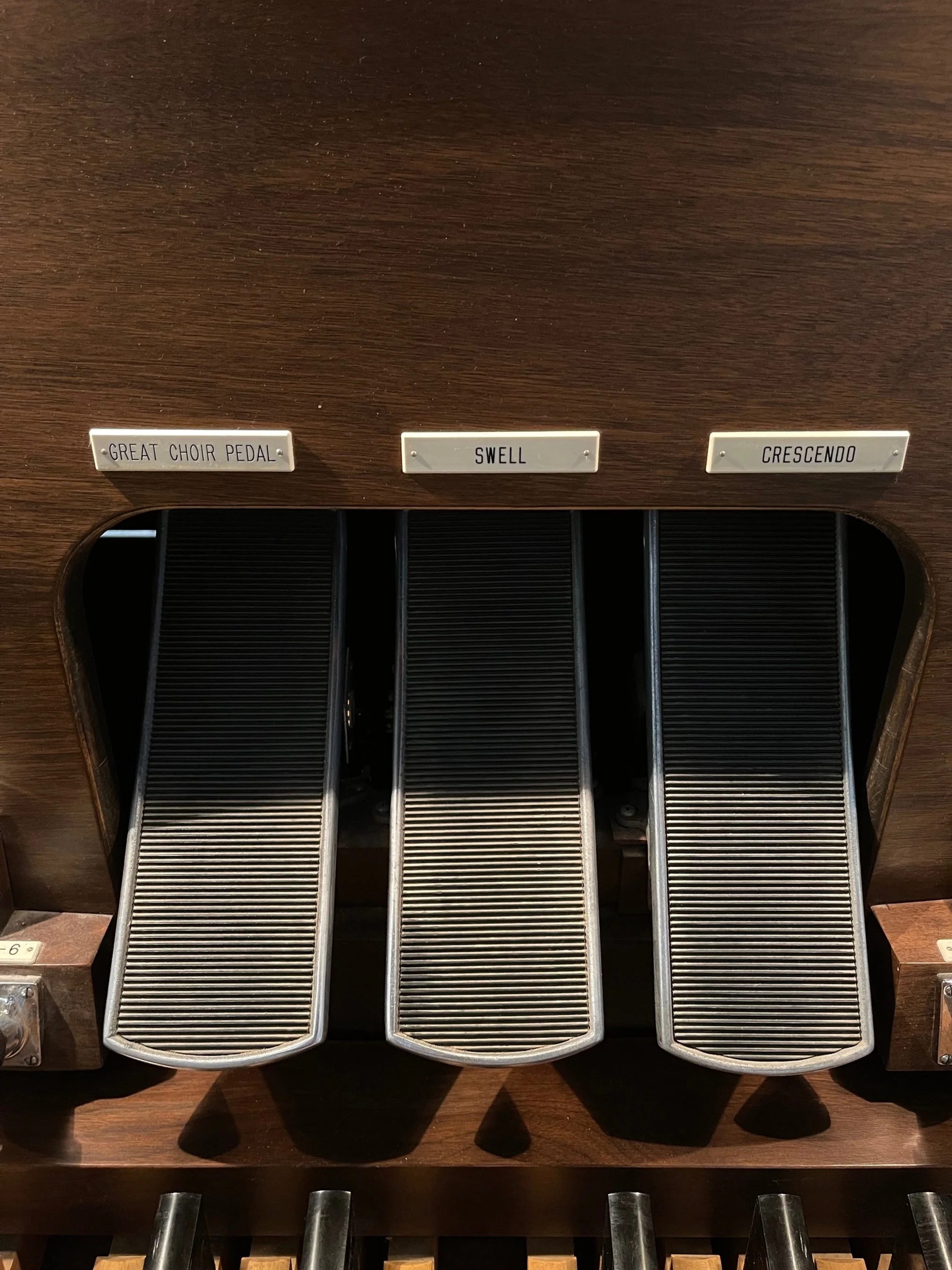
Another key difference is the row of keys on the floor, called the pedals. Beneath the manuals lie 32 pedals arranged just like a keyboard with white and black keys. The pedals sound at an octave lower in pitch, giving us that rich, deep, full sound we associate with the organ. There are also three larger pedals below the console that control the volume of the organ’s divisions.
Finally, the recital concluded with three pieces by American composers. We heard a piece originally composed by jazz pianist Billy Strayhorn, demonstrating the lush strings and solo oboe stops on the organ. The last two pieces were based on the familiar hymns, A Mighty Fortress is Our God and Amazing Grace. What makes our new organ so extraordinary is its versatility. Where organs of the past were specific and 'of their time', our new instrument takes the best of all of the various schools of organ design and puts them into one. That is how we organists are able to play repertoire from the 1600’s all the way to contemporary music written today and have it all sound authentic and period-correct.
Though the organ’s primary use at Dutilh is to enhance congregational singing and choral anthems, it was a delight showcasing the instrument last Sunday night and the vast array of concert literature it can handle. If you want to know more about our organ, don’t be a stranger! Come on up after a service and I’ll gladly talk your ear off about how incredible it is to have this organ at Dutilh. If you missed it, stay tuned for more recitals and events featuring the organ.